
Stop work in the area and protect people first; the contract comes second. Asbestos can then be an NEC compensation event, usually under 60.1(12) as a physical condition, but what decides it is what the surveys and the Site Information showed, and whether the Project Manager issues an instruction.
The clause numbers below are for NEC4 ECC. The 60.1 and 61 numbers are the same in NEC3 ECC, where early warnings are at 16.1 and impossible or illegal requirements at 18.1 rather than 17.2.
What to do now
- Stop, keep people out and don't disturb the material. Tell anyone who may have been exposed and get competent advice at once. Asbestos work is tightly regulated in Great Britain, including the Control of Asbestos Regulations 2012, and some work can only be done by a licensed contractor. Your safety adviser decides what can happen next, not the commercial team.
- Tell the Project Manager and the Client today. The Client's own records, including any asbestos register or survey, may be the fastest way of finding out what it is.
- Have it sampled and identified by a competent specialist before you assume what it is. Mark and isolate the area.
- Give an early warning under 15.1 if it could affect the Prices or Completion.
- Notify a compensation event no later than eight weeks after you became aware (61.3; seven weeks under NEC4 ECS), unless the Project Manager has already done so with an instruction.
- Ask how the Project Manager wants it dealt with. A stop instruction or a change to the Scope helps you, as it creates its own event.
Which event applies?
| What happened | Event | Time bar? |
|---|---|---|
| Project Manager instructs that work stops | 60.1(4) | No, it arises from an instruction |
| Project Manager instructs removal, or a changed method, that alters the Scope | 60.1(1) | No, it arises from an instruction |
| You stopped because the law required it, and no instruction came | 60.1(12), if the test is met | Yes, eight weeks |
| Scope requires something that can't lawfully be done | Clause 17.2 instruction, then 60.1(1) | No, once instructed |
The stop work event and physical conditions event have their own guides. Note that 60.1(12) isn't limited to soil: it speaks of physical conditions within the Site, and an existing building on the Site may fall within this. Expect that to be tested if the job is a refurbishment.
Would an experienced contractor have allowed for it?
Under 60.2 you are taken to have considered the Site Information, public documents it refers to, what you could see on inspection, and what an experienced contractor could reasonably have or obtain.
- A survey identified it, or warned of inaccessible areas. Expect to be treated as knowing, at least in part. Limits in a survey often matter as much as its findings.
- A refurbishment and demolition survey was issued and came back clear for this area. A stronger case, particularly if the area was covered by the survey.
- An older building with no survey issued. A weaker case, as age and construction are themselves signals. Whether a survey should have been asked for will also come up.
- Buried fragments in made ground. Compare with what the ground investigation reported. Contaminated ground follows the same logic.
Evidence to keep
- Every survey issued to you, with the date you received it.
- Your tender assumptions on asbestos and any questions asked at that time.
- The dated discovery record, photos taken from a safe position, sample results and the specialist's report.
- Removal costs, air test records, consignment notes, and what was stopped and for how long.
- Your risk assessments and your decision to stop. Those also defend your people.
What the Client side will say
Expect to hear that a building of that age was bound to contain asbestos, and that the survey excluded the area, so any allowance was yours to make. They may also suggest that a stop was your own decision and that work elsewhere could have continued. Answer that with the sequence on the programme and your safety adviser's written advice. Clause 63.9 assesses the event assuming a competent, prompt response, so keep a clear timeline.
The contract says only the excess over a reasonable allowance counts under 60.1(12). In practice, the removal can't wait, so agree the safe method and let the entitlement argument run alongside it. A contractor's duty under health and safety law doesn't depend on who pays. Any question about exposure or regulatory enforcement should go straight to a specialist lawyer and your insurer, not through contract correspondence.
A warning on client-side instructions: if the Project Manager tells you to carry on without proper controls, don't. Clause 17.2 gives a route where a requirement can't lawfully be followed. Related situations for both sides are in NEC questions answered.
Related guides
- NEC Questions Answered: Real Situations on Site
- We Found Archaeology on Site: Who Pays?
- It Has Rained for Weeks: Can We Claim for Weather?
- How Do We Prove a Weather Compensation Event?
- We Found Unmarked Utilities: Is It a Compensation Event?
- We Found Contaminated Ground: What Happens Under NEC?
How this looks in Contract Status
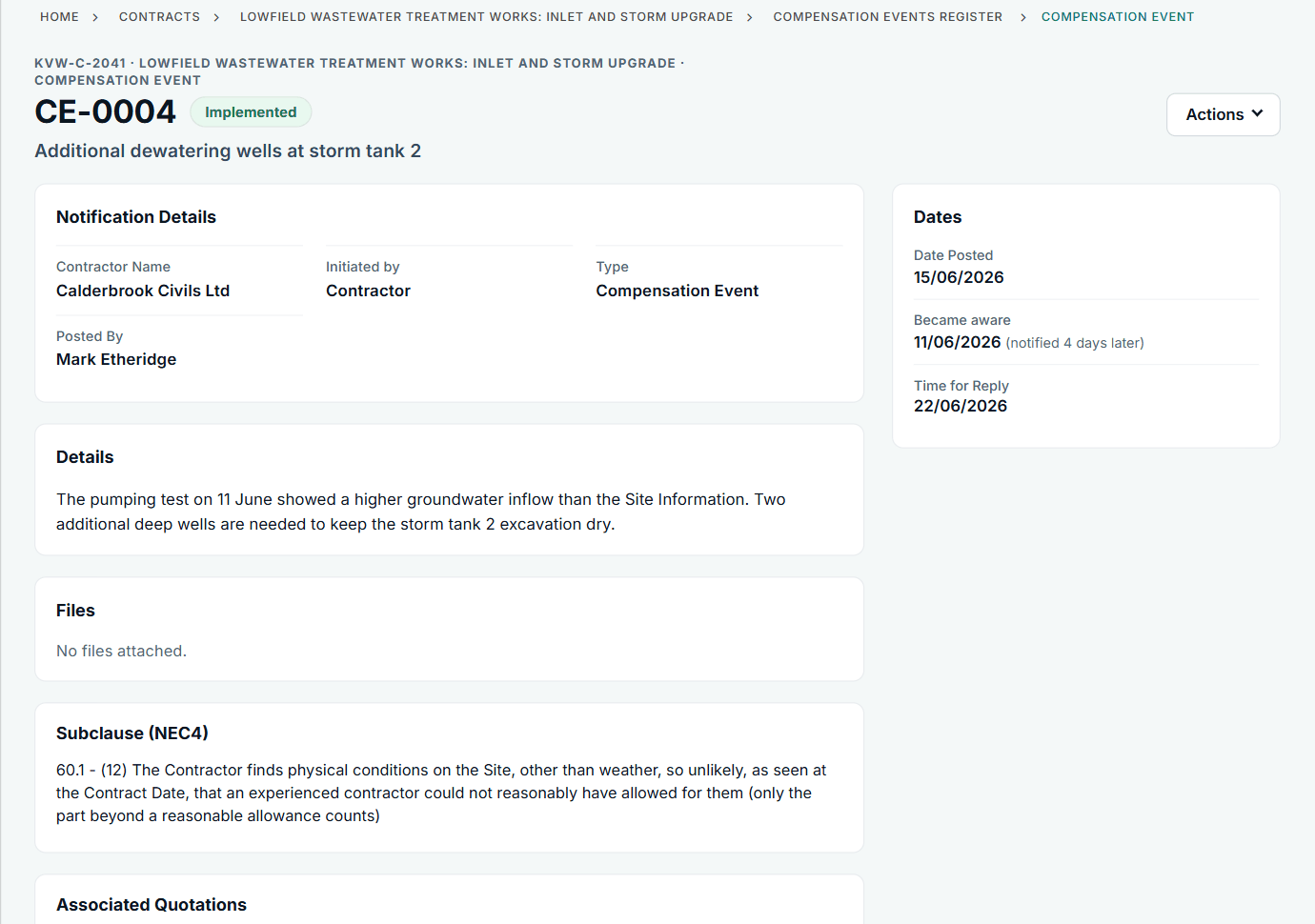
A 60.1(12) event, notified four days after the test that showed the inflow. See the worked example.
See how this works in practice
Click through Contract Status with sample contracts: raise the notice, reply to it, and watch both sides of one record.
Take the guided tour Book a demo
Use the NEC deadline calculator, use the free NEC tools or download free NEC templates.
This guide is general information in our own words, not legal advice. Your contract and its Contract Data always govern. NEC, NEC3 and NEC4 are trade marks of Thomas Telford Ltd; Contract Status is not affiliated with or endorsed by NEC.