
Yes, you have a direct remedy when there is no first programme under NEC: each assessment takes 25% off the Price for Work Done to Date until a compliant one is submitted. It depends on one fact, which is whether the Contract Data identified a programme.
If it did, that programme is already the Accepted Programme and the hold doesn't apply. The rule is clause 50.5 in the NEC4 Engineering and Construction Contract (ECC) and 50.3 in NEC3. This is one of our NEC questions answered.
Steps for the Project Manager now
- Read the Contract Data. Note whether a programme is identified and, if not, the period allowed for the first one under 31.1.
- Apply the hold at the next assessment date. It goes in the assessment itself, so it needs no separate notice. Show it as its own line so the Contractor can see why the figure has dropped.
- Write once, with the date. State what is missing and that the deduction continues until a programme showing the required information is submitted.
- Assess compensation events yourself if they arrive. 64.1 lets you do this when a required programme hasn't been sent, and 64.2 lets you use your own view of the remaining work.
- When one arrives, reply within two weeks under 31.3, accepting it or giving a reason the contract allows.
How much is held, and when it stops
A fictional NEC4 Option A contract, with illustrative figures. The first programme is due eight weeks after the Contract Date.
| Assessment | Price for Work Done to Date | Programme position | Held back |
|---|---|---|---|
| 1 | £80,000 | Nothing submitted | £20,000 |
| 2 | £210,000 | Nothing submitted | £52,500 |
| 3 | £390,000 | Submitted, but with no float or time risk allowances shown | £97,500 |
| 4 | £560,000 | Resubmitted complete; you reject the sequence as impractical | Nil |
Row 4 is the one people get wrong. The hold ends on submission of a programme showing the required information, not on acceptance. A rejection for an impractical plan leaves you without an Accepted Programme, but the money comes back. Row 3 goes the other way: the Contractor has sent something, but the required content isn't there.
Because the deduction is cumulative, its release at assessment 4 pays the whole sum back in one go. It is a cash-flow lever, not money the Client keeps. See the first programme guide for the wider rules and clause 31.2 for the content list.
Which situation are you in?
| Facts | Effect |
|---|---|
| No programme identified, none submitted | 25% held. The period in the Contract Data has been missed if it has passed |
| No programme identified, period still running | The clause turns on submission rather than on the deadline, so the hold can apply from the first assessment |
| Programme identified in the Contract Data | No hold. Any revision is a clause 32 matter: see when the contractor stops updating the programme |
| Contract amended by a Z clause | The percentage or trigger may differ. Your amended wording wins |
What the Contractor will probably argue
- "You had a draft from us." A draft shared informally isn't a submission for acceptance. Ask for it to be sent formally.
- "You rejected it, so release the money." Correct if every required item was shown. Only hold on if information is missing, and name it.
- "You can't withhold without a pay less notice." The hold is part of how the amount due is worked out, so it should already be in the certificate. A deduction made after the certificate is a different thing, and would need a pay less notice.
The contract position against good practice
The contract says the hold applies, and it doesn't make it a matter of discretion. In practice, a Contractor who is losing a quarter of its cash usually produces a programme quickly, so warn it before the first certificate rather than surprising it. Also think about your own exposure. With no Accepted Programme, there are no accepted dates for access or Client-supplied items, and every early event turns into a debate about what the plan was. Getting a sound programme matters more to the Client than the pressure of holding money.
A long refusal to provide one may also be a substantial failure to comply with obligations, which is the start of the 91.2 default route. Take advice before going there.
Related guides
- NEC Questions Answered: Real Situations on Site
- The Client's Change Used Up Our Float: Can We Claim?
- We Missed a Key Date: What Does It Cost?
- The PM Says We Have Not Reached Completion: Who Decides?
- There Is No Accepted Programme: How Are Events Assessed?
- The Contractor Has Stopped Updating the Programme
How this looks in Contract Status
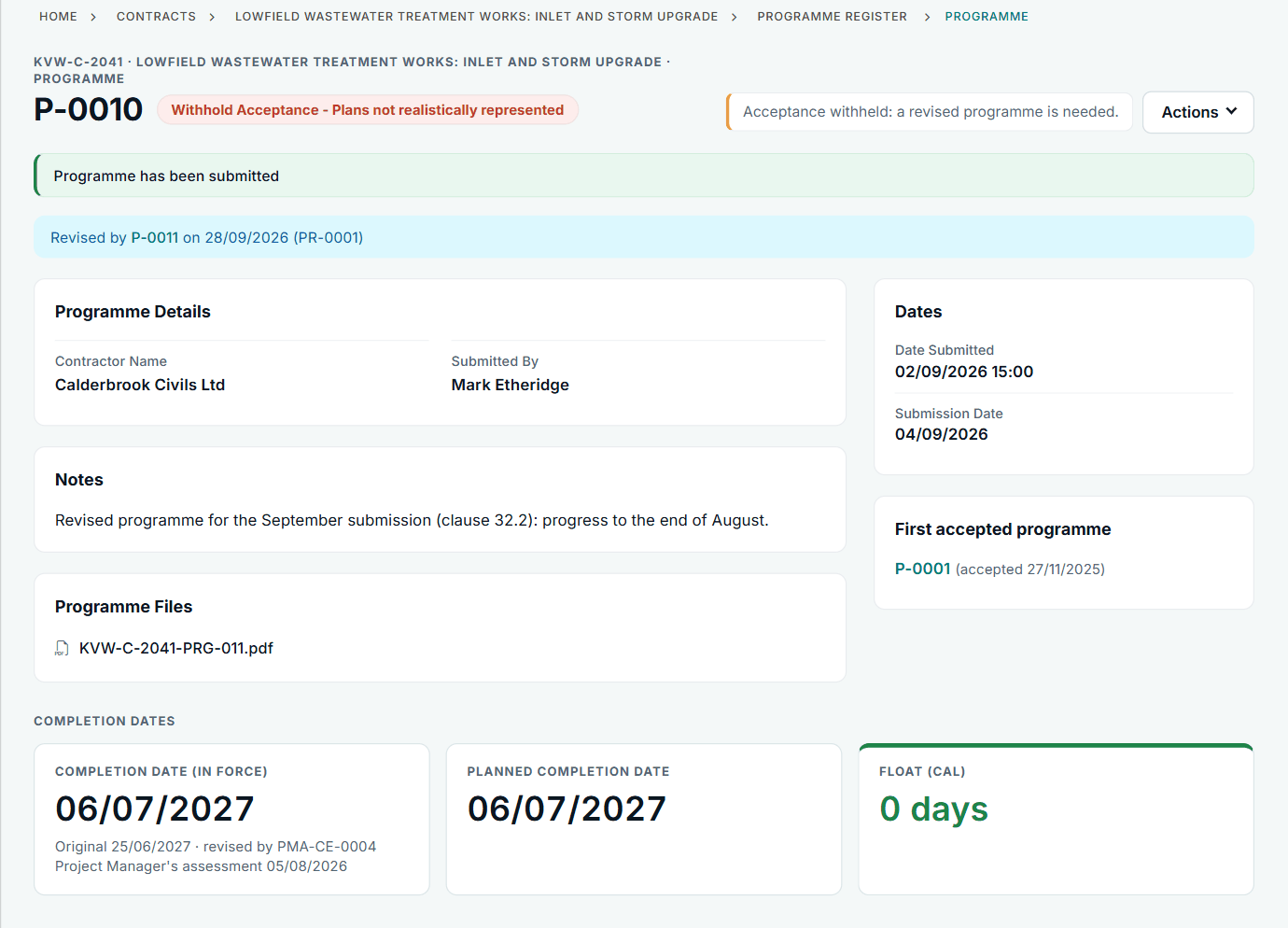
A programme not accepted, from the Contractor side, with the reason in its status. See the worked example.
See how this works in practice
Click through Contract Status with sample contracts: raise the notice, reply to it, and watch both sides of one record.
Take the guided tour Book a demo
Use the NEC deadline calculator, use the free NEC tools or download free NEC templates.
This guide is general information in our own words, not legal advice. Your contract and its Contract Data always govern. NEC, NEC3 and NEC4 are trade marks of Thomas Telford Ltd; Contract Status is not affiliated with or endorsed by NEC.